
Selecting the wrong AI governance platform can expose organizations to regulatory,
operational, and reputational risk under the EU AI Act.
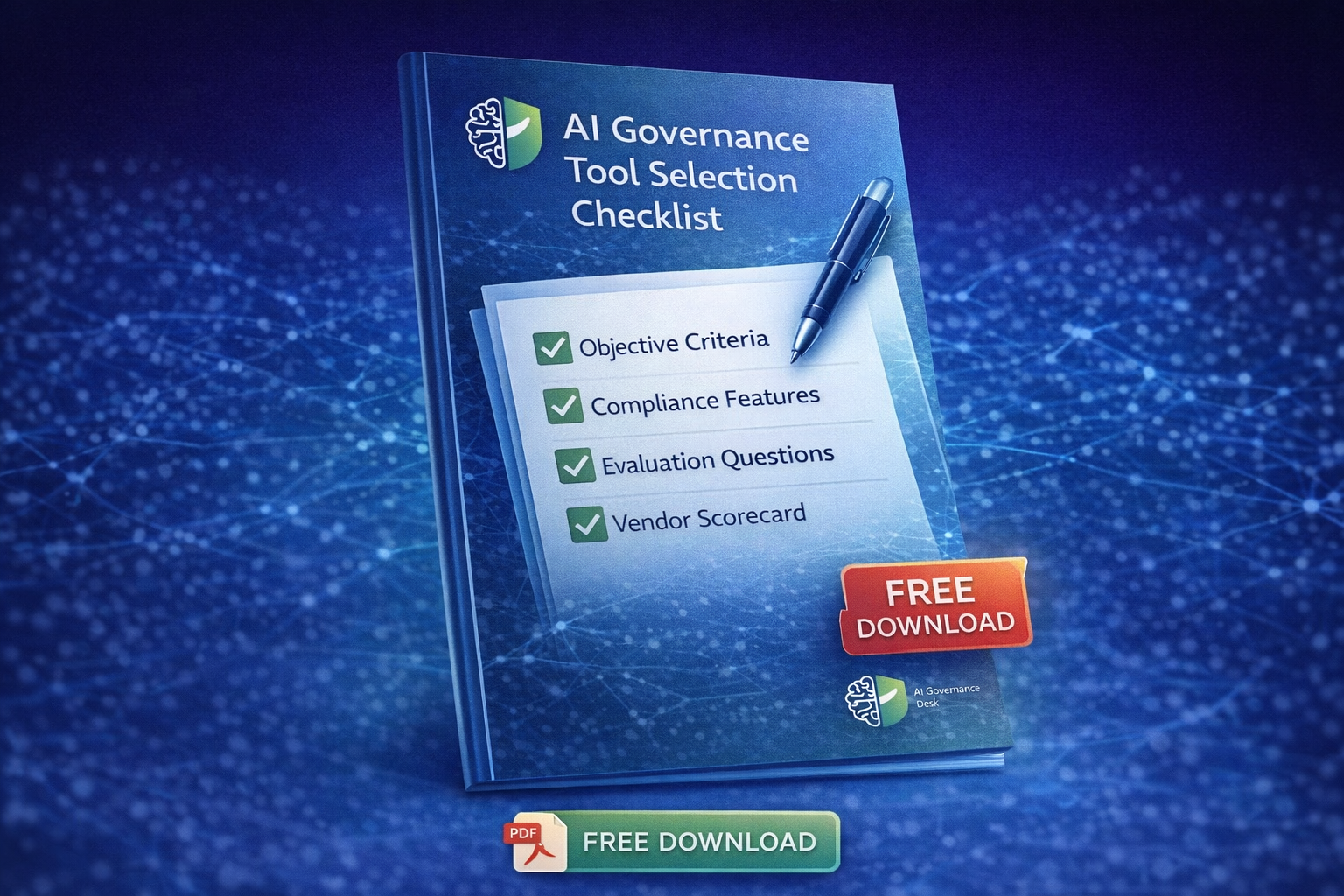
The AI Governance Tool Selection Checklist is a structured,
technology-agnostic evaluation framework designed to help governance,
compliance, and AI risk teams objectively assess whether AI governance tools
support critical EU AI Act requirements.
This free checklist enables defensible decision-making across data lineage,
model monitoring, and documentation readiness — before procurement,
deployment, or regulatory review.
📄 Download the AI Governance Tool Selection Checklist (PDF)
Free • Version 1.1 • Internal & Advisory Use
What This Checklist Helps You Do
- Evaluate AI governance platforms against EU AI Act expectations
- Identify governance gaps before procurement or deployment
- Compare tools using consistent, evidence-based scoring
- Support audit readiness and regulatory inquiries
- Document defensible governance decisions
What’s Inside the Checklist
- Data lineage & observability evaluation criteria
- Model monitoring and drift detection requirements
- Documentation and audit management controls
- Standardized Yes / Partial / No scoring framework
- Overall governance readiness summary
Who This Checklist Is For
- AI governance and oversight teams
- Compliance and legal professionals
- Chief Risk Officers (CROs)
- Chief Data Officers (CDOs)
- Machine learning and AI engineering leaders
- Internal audit and assurance teams
How This Supports EU AI Act Compliance
The checklist reflects governance capabilities expected under the EU AI Act,
including Article 10 data governance, post-market monitoring obligations,
and Annex IV technical documentation requirements.
While the checklist does not certify compliance, it helps organizations
determine whether AI governance platforms provide the controls needed to
support compliant AI deployment in regulated or high-risk contexts.
Disclaimer: This checklist is provided for informational and
internal evaluation purposes only. It does not constitute legal advice,
regulatory approval, or certification of compliance under the EU AI Act.
Organizations remain responsible for ensuring compliance with applicable laws.